
Preview: 3 of 14 pages. Scroll sideways to see more.
$3.00
In your cart. View cart
No account needed. You get a download link.
| Grade | 6th Grade to 10th Grade |
|---|---|
| Resource type | Games |
| Subject | Reading |
| Format | PDF, 14 pages |
| How was this made? | Created by hand, with images from generation tools |
| Updated | 2026-10-26 |
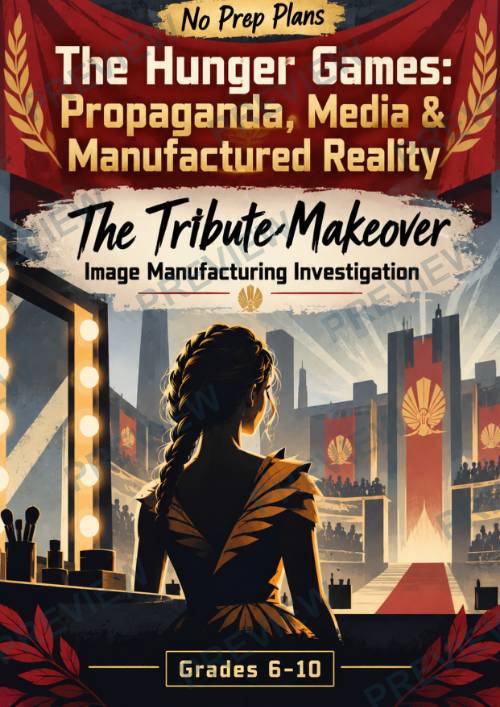
The Hunger Games: The Tribute MakeoverImage Manufacturing Investigation | 6-10th
The Hunger Games: The Tribute MakeoverImage Manufacturing Investigation | Grades 6–10
Explore propaganda, media, image, and manufactured reality through The Hunger Games! In this no-prep lesson, students investigate how a tribute’s appearance is deliberately constructed before the Games and analyze how styling, grooming, costume, and presentation can shape public perception.
Students move beyond simply identifying the makeover process to examine why particular image choices are made, what audiences are encouraged to believe, and how manufactured identity can differ from authentic identity. The lesson concludes by connecting the novel to real-world examples of branding, media, advertising, entertainment, and public image.
What's Included
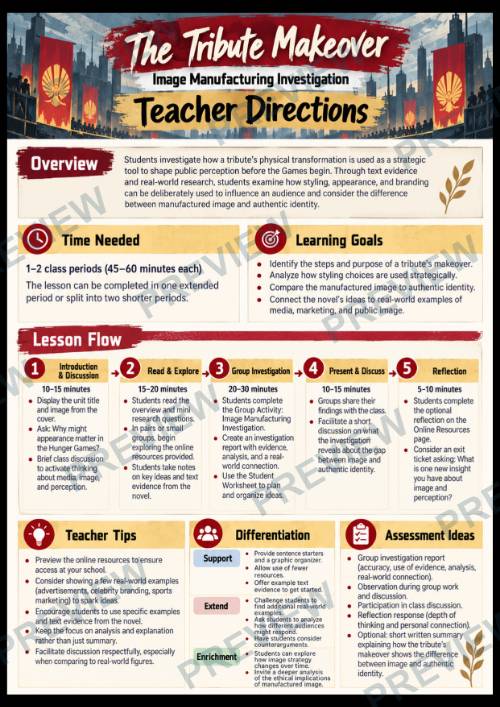
- Teacher Directions & Overview
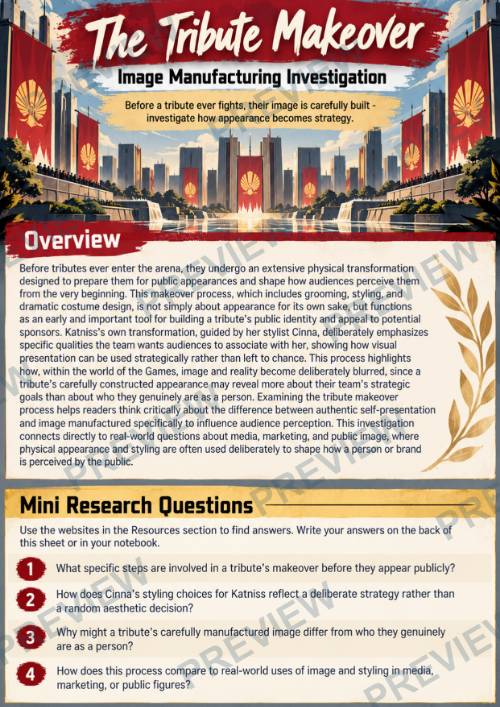
- Mini Research Questions
- 5-Step Group Activity
- 3 Student Investigation Pages
- Color & Black-and-White Versions
- Online Research Resources
Students Will Explore
- How a tribute’s public image is deliberately constructed
- How styling choices communicate specific qualities and messages
- The relationship between appearance, audience perception, and sponsorship
- The difference between image and authentic identity
- Who controls a manufactured public image
- What audiences are shown—and what may be hidden or minimized
- How media can create a constructed version of reality
- Connections to modern advertising, branding, entertainment, sports, and social media
Why Teachers Love This
- Designed for 1–2 class periods
- No complicated preparation
- Combines literary analysis with media literacy
- Encourages evidence-based thinking rather than plot recall
- Provides structured support for Grades 6–10
- Works individually, with partners, or in groups
- Color and printer-friendly versions included
- Creates meaningful connections between literature and students’ modern media environment
Perfect For
- The Hunger Games novel studies
- Literary analysis
- Critical thinking
- Small-group learning
- Sub plans
- Enrichment
- Interdisciplinary ELA & Social Studies
Part of The Hunger Games: Propaganda, Media & Manufactured Reality Series
This is an independently created educational resource and is not affiliated with, authorized by, endorsed by, or sponsored by Suzanne Collins, her publishers, or related rights holders. A copy of the novel is not included.
Created by GR Creative Creations
Follow GR Creative Creations to receive 10% off resources
·
This resource is also part of a bundle with 9 other resources
Questions
No questions yet.
Ask a question
Your question goes to No Prep Plans. Answers show on this page, without your name or email.
Sent. The answer will show on this page.
Reviews
No reviews yet. Buyers can review a resource from their order page.
More from No Prep Plans
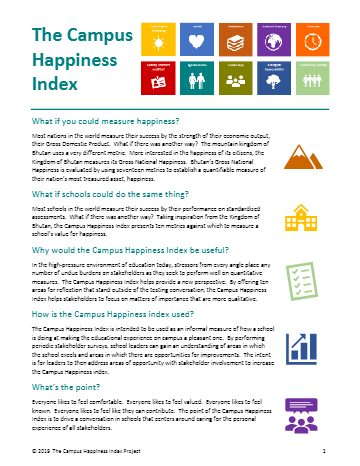
Campus Happiness Index
 No Prep Plans
$3.00
Book Labels
No Prep PlansFree
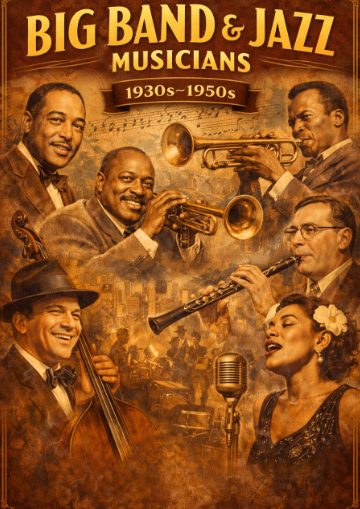
Big Band & Jazz Musicians Poster Set (1930s–1950s)
No Prep Plans$3.50
FREE Geography Learning Stations Signs & Choice Cards--Reusable
No Prep PlansFree
Refugee: Author's Craft, Themes & Evidence Bundle 10 Literary Analysis Lessons
No Prep Plans$29.25
Ancient World Turning Points Bundle | 10 Research + Group Project Lessons | 6-10
No Prep Plans$29.25
Request a quote or purchase order
For schools and districts. Your request goes to No Prep Plans, who will reply to your email with a quote or invoice.
Sent. The seller will reply to your email.
Report this listing
What your notice must include
The address of the listing on Classroom Clearinghouse (for example, the /p/ link).
https://classroomclearinghouse.com/p/xpsbxdvz3v
Your name, mailing address, phone number, and email.
How to report
Your name, company, mailing address, phone number, and email.
The address of each listing or store you are reporting.
https://classroomclearinghouse.com/p/xpsbxdvz3v
Copyright owners can also use the DMCA notice page.
Thanks. The report is in the review queue.