
Preview: 3 of 14 pages. Scroll sideways to see more.
$3.00
In your cart. View cart
No account needed. You get a download link.
| Grade | 6th Grade to 8th Grade |
|---|---|
| Resource type | Projects |
| Subject | Geography |
| Format | PDF, 14 pages |
| How was this made? | Created by hand, with images from generation tools |
| Updated | 2026-10-26 |
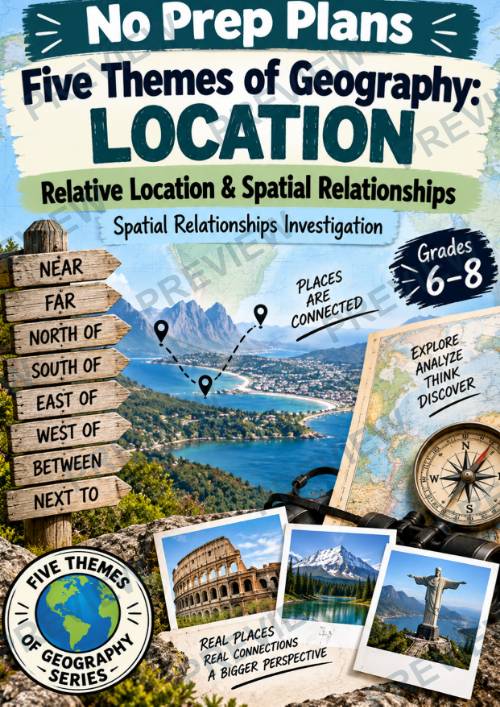
Five Themes of Geography —Location | Relative Location & Spatial Relationships
Five Themes of Geography — Location Relative Location & Spatial Relationships | Spatial Relationships Investigation | Grades 6–8
Help students move beyond simply asking “How far apart are these places?” and begin thinking about how and why places are connected with this engaging no-prep geography investigation!
Students become spatial analysts as they investigate pairs of places connected through trade, cultural exchange, or historical links. They examine distance, direction, terrain, transportation, and other factors before analyzing how spatial relationships can influence the historical or economic development of places.
This lesson is part of the Five Themes of Geography Series and focuses on the theme of Location. It works independently or as part of a larger study of relative location, latitude and longitude, coordinates, and spatial relationships.
Designed for 1–2 class periods, this lesson combines research, geographic analysis, collaboration, and critical thinking.
WHAT’S INCLUDED
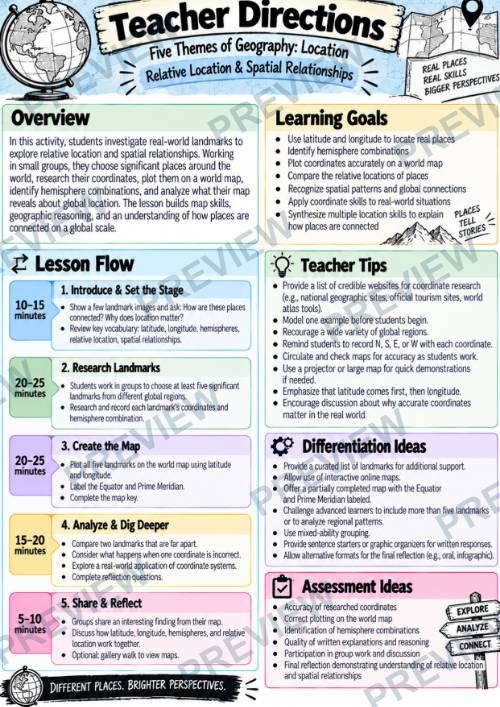
- Teacher Directions
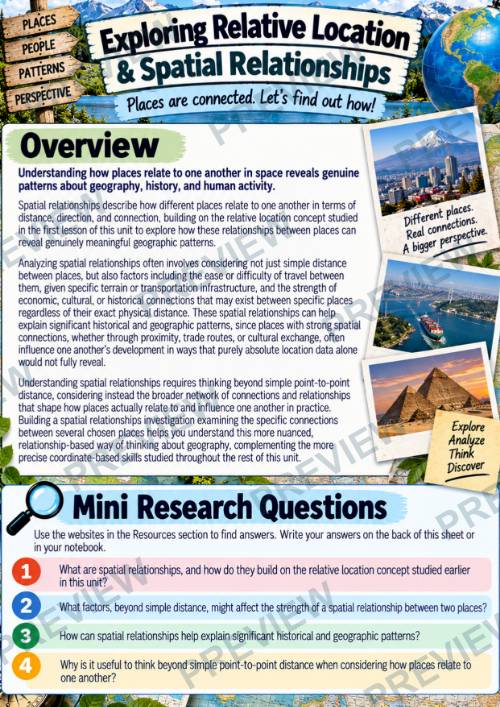
- Student Overview + Mini Research Questions
- Group Activity: Spatial Relationships Investigation
- Place Pair Research & Planning
- Distance vs. Connection Analysis
- Connection Strength Investigation
- Connections Create Change Analysis
- Color + printer-friendly B&W student pages
STUDENTS WILL LEARN
- What spatial relationships are and how they build on relative location
- How distance and direction help describe relationships between places
- Why physical distance alone does not fully explain how places are connected
- How terrain and transportation infrastructure can strengthen or limit connections
- How trade, cultural exchange, and historical connections link different places
- How spatial relationships can influence historical and economic development
- How to use evidence to analyze the strength and significance of a geographic connection
- How spatial relationships reveal patterns that absolute location alone may not show
PERFECT FOR
- Sub Plans
- Five Themes of Geography
- Relative Location
- Spatial Relationships
- Map Skills
- World Geography
- Human Geography
- Humanities & Social Studies
- Inquiry-Based Learning
- Critical-Thinking Practice
WHAT TEACHERS LOVE
✓ Part of a Five Themes of Geography Series
✓ No-prep and easy to implement
✓ Designed for 1–2 class periods
✓ Moves students beyond basic map-location skills
✓ Connects geography to history, economics, trade, and culture
✓ Encourages research, evidence, analysis, and geographic reasoning
✓ Includes meaningful Digging Deeper activities
✓ Includes color and printer-friendly B&W student pages
·
This resource is also part of a bundle with 9 other resources
Questions
No questions yet.
Ask a question
Your question goes to No Prep Plans. Answers show on this page, without your name or email.
Sent. The answer will show on this page.
Reviews
No reviews yet. Buyers can review a resource from their order page.
More from No Prep Plans
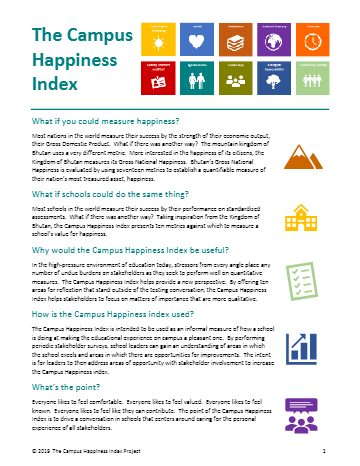
Campus Happiness Index
 No Prep Plans
$3.00
Book Labels
No Prep PlansFree
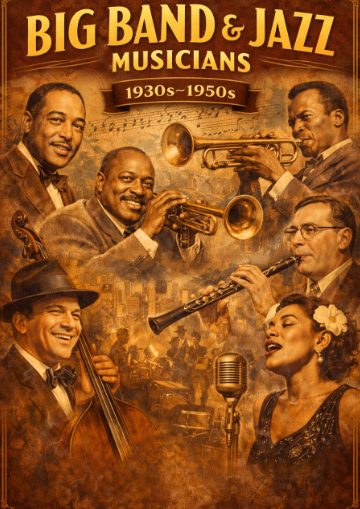
Big Band & Jazz Musicians Poster Set (1930s–1950s)
No Prep Plans$3.50
FREE Geography Learning Stations Signs & Choice Cards--Reusable
No Prep PlansFree
Refugee: Author's Craft, Themes & Evidence Bundle 10 Literary Analysis Lessons
No Prep Plans$29.25
Ancient World Turning Points Bundle | 10 Research + Group Project Lessons | 6-10
No Prep Plans$29.25
Request a quote or purchase order
For schools and districts. Your request goes to No Prep Plans, who will reply to your email with a quote or invoice.
Sent. The seller will reply to your email.
Report this listing
What your notice must include
The address of the listing on Classroom Clearinghouse (for example, the /p/ link).
https://classroomclearinghouse.com/p/v9qn7ecsr3
Your name, mailing address, phone number, and email.
How to report
Your name, company, mailing address, phone number, and email.
The address of each listing or store you are reporting.
https://classroomclearinghouse.com/p/v9qn7ecsr3
Copyright owners can also use the DMCA notice page.
Thanks. The report is in the review queue.