
Preview: 3 of 16 pages. Scroll sideways to see more.
$4.00
In your cart. View cart
No account needed. You get a download link.
| Grade | 6th Grade to 8th Grade |
|---|---|
| Resource type | Projects |
| Subject | Science |
| Format | PDF, 16 pages |
| How was this made? | Created by hand, with images from generation tools |
| Updated | 2026-10-26 |
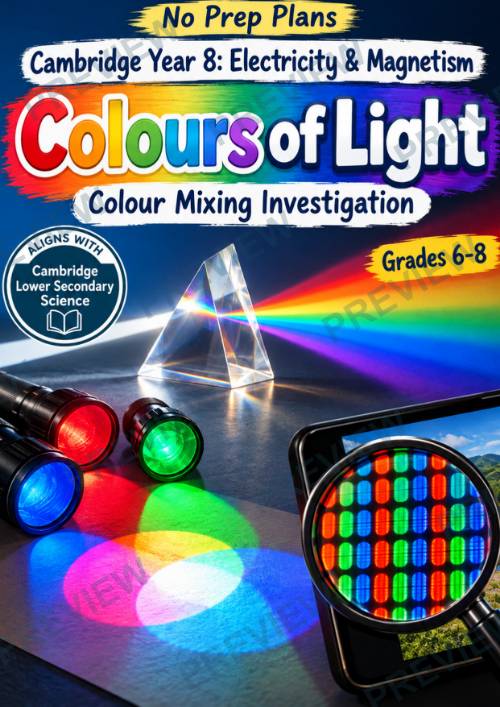
Cambridge Year 8 Science: Colours of Light | Colour Mixing Investigation
Cambridge Year 8 Science: Colours of Light | Colour Mixing Investigation
Bring light, colour, and RGB mixing to life with this engaging Cambridge Year 8 Electricity & Magnetism investigation. Students explore how white light forms the visible spectrum, investigate coloured filters, discover how red, green, and blue light combine, and apply their understanding through a hands-on Colour Mixing Investigation. The lesson also connects the science to familiar technology by exploring how RGB pixels create colour on phone, TV, and computer screens. 01-
Designed for Grades 6–8 and set up for approximately 1–2 × 45–60 minute classes, this resource combines research, experimental planning, data collection, scientific explanation, and evaluation in an easy-to-use lesson sequence.
What's Included
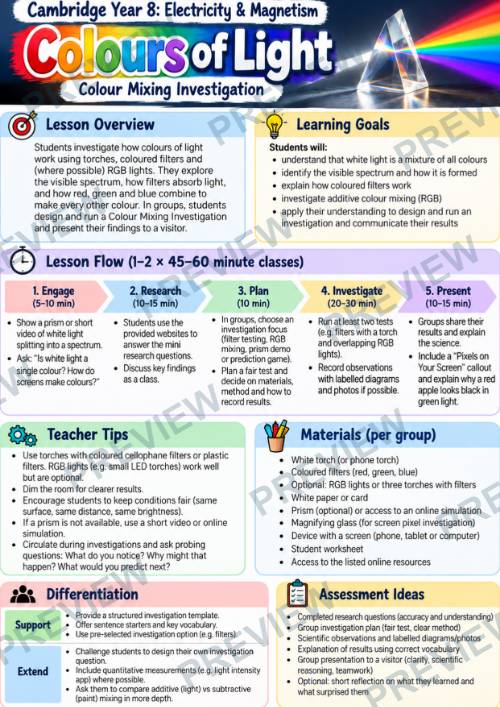
- Teacher Directions with lesson flow, differentiation, teacher tips, and assessment ideas
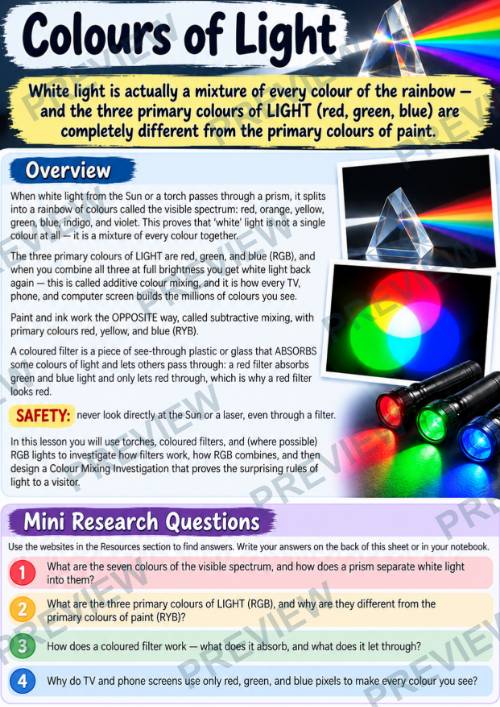
- Student-friendly Colours of Light overview and Mini Research Questions
- Group Colour Mixing Investigation directions
- Research & Investigation Planning worksheet
- Experimental Method, Data & Observations worksheet
- Results, Conclusions & Digging Deeper worksheet
- Red Apple Challenge and RGB screen-pixel application
- Early Finisher Choice Board with 9 extension activities
- Online research resources
- Full-colour and printer-friendly black-and-white student pages
- Disclaimers & Credits page
Students Will
Students will investigate the visible spectrum, RGB primary colours, additive colour mixing, coloured filters, and RGB pixels before planning and conducting their own fair-test investigation. They will make predictions, identify variables, develop a method, collect observations, analyse evidence, draw conclusions, consider sources of error, and explain their results using scientific vocabulary. The investigation also challenges students to explain why a red apple appears black under pure green light.
Why Teachers Love This Resource
This lesson combines science content with practical scientific inquiry rather than relying on worksheets alone. The structured lab-report format supports students through the complete investigation process, while differentiation options and extension activities make it easy to adapt for different learners. Colour and black-and-white versions also make classroom printing flexible.
Perfect for: Cambridge Lower Secondary Science • Year 8 Science • Electricity & Magnetism • Light & Colour • Visible Spectrum • RGB Colour Mixing • Coloured Filters • Scientific Investigations • Lab Reports • Group Projects
Cambridge Disclaimer
This resource is an independent educational product created by GR Creative Creations to support classroom instruction and student learning. It is not created by, affiliated with, endorsed by, sponsored by, or officially connected to Cambridge University Press & Assessment, Cambridge Assessment International Education, or the Cambridge Lower Secondary Science programme.
References to Cambridge Lower Secondary Science are used strictly for curriculum-alignment purposes. This resource is designed to support and complement commonly taught learning objectives, skills, and scientific practices associated with Cambridge Lower Secondary Science frameworks, but it is not an official Cambridge curriculum document, assessment, publication, or approved instructional material.
·
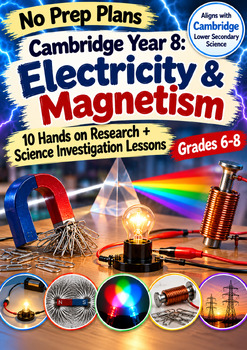
This resource is also part of a bundle with 9 other resources
Questions
No questions yet.
Ask a question
Your question goes to No Prep Plans. Answers show on this page, without your name or email.
Sent. The answer will show on this page.
Reviews
No reviews yet. Buyers can review a resource from their order page.
More from No Prep Plans
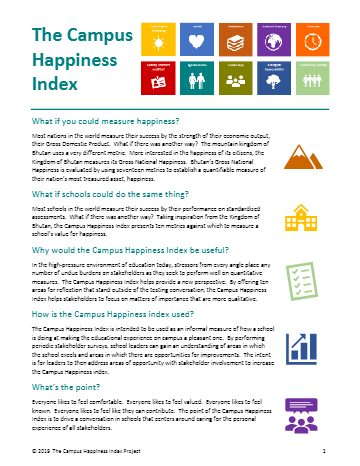
Campus Happiness Index
 No Prep Plans
$3.00
Book Labels
No Prep PlansFree

Big Band & Jazz Musicians Poster Set (1930s–1950s)
No Prep Plans$3.50
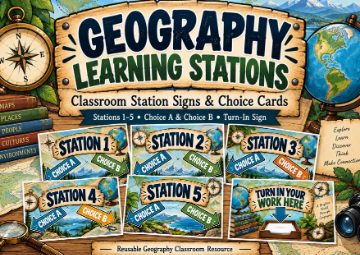
FREE Geography Learning Stations Signs & Choice Cards--Reusable
No Prep PlansFree
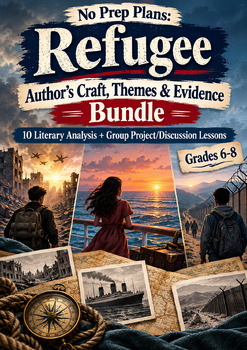
Refugee: Author's Craft, Themes & Evidence Bundle 10 Literary Analysis Lessons
No Prep Plans$29.25
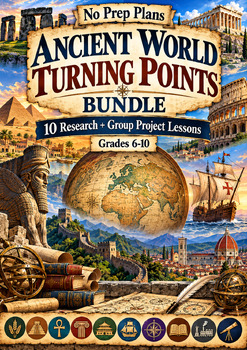
Ancient World Turning Points Bundle | 10 Research + Group Project Lessons | 6-10
No Prep Plans$29.25
Request a quote or purchase order
For schools and districts. Your request goes to No Prep Plans, who will reply to your email with a quote or invoice.
Sent. The seller will reply to your email.
Report this listing
What your notice must include
The address of the listing on Classroom Clearinghouse (for example, the /p/ link).
https://classroomclearinghouse.com/p/rf7f7g93xa
Your name, mailing address, phone number, and email.
How to report
Your name, company, mailing address, phone number, and email.
The address of each listing or store you are reporting.
https://classroomclearinghouse.com/p/rf7f7g93xa
Copyright owners can also use the DMCA notice page.
Thanks. The report is in the review queue.