
Preview: 3 of 14 pages. Scroll sideways to see more.
$3.25
In your cart. View cart
No account needed. You get a download link.
| Grade | 6th Grade to 8th Grade |
|---|---|
| Resource type | Projects |
| Subject | History |
| Format | PDF, 14 pages |
| How was this made? | Created by hand, with images from generation tools |
| Updated | 2026-10-26 |
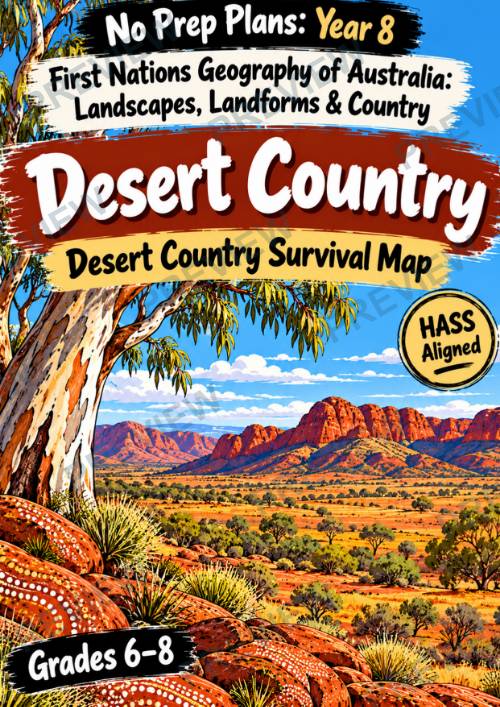
First Nations Geography of Australia | Desert Country Survival Map | HASS
First Nations Geography of Australia | Desert Country Survival Map | HASS
Explore Australia’s desert landscapes, Traditional Owner knowledge, and connections to Country with this ready-to-use Geography lesson for Grades 6–8.
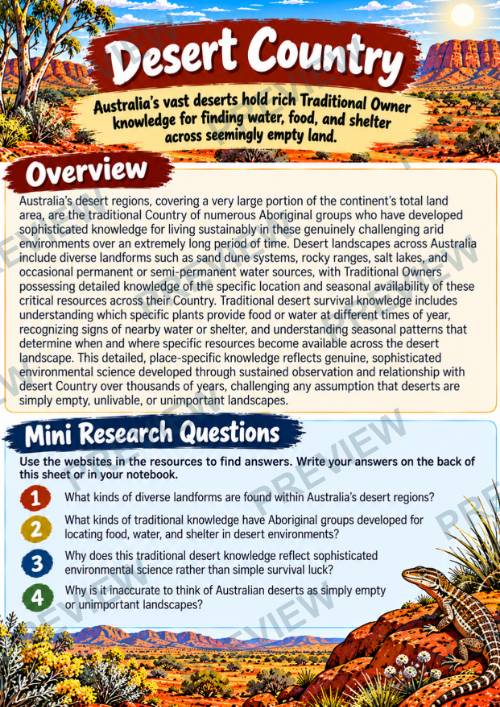
Students investigate Australian desert regions as diverse, resource-rich landscapes rather than simply “empty” places. Through research, they examine desert landforms, food and water resources, shelter, seasonal patterns, and publicly shared examples of the detailed environmental knowledge developed by Aboriginal peoples through sustained observation and relationship with Country.
The lesson culminates in a collaborative Desert Country Survival Map, where students connect geography with Traditional Owner knowledge while practicing research, evidence selection, source evaluation, and respectful use of publicly shared cultural information.
What’s Included
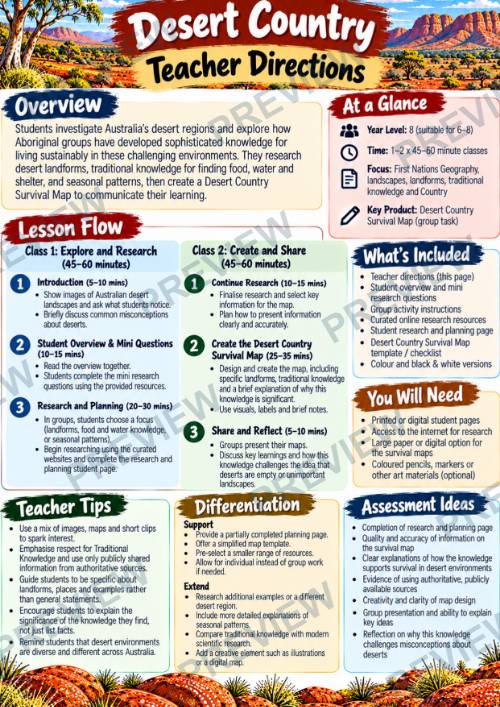
- Teacher Directions for 1–2 class periods
- Student-friendly overview + mini research questions
- Desert Country Survival Map group activity
- Curated authoritative research resources
- 3 research, analysis & planning pages
- Color + black-and-white student pages
Students Will
- Explore the diversity of Australian desert landscapes
- Investigate sand dunes, rocky ranges, salt lakes, water sources, and other desert landforms
- Research publicly shared examples of Traditional Owner environmental knowledge
- Examine connections between food, water, shelter, landscape, and Country
- Investigate how seasonal changes affect the availability of resources
- Analyze how careful observation and experience contribute to knowledge of Country
- Connect specific knowledge to specific places and environments
- Use evidence to challenge assumptions that deserts are simply empty, unlivable, or unimportant
- Recognize the sophistication of long-developed environmental knowledge
- Distinguish between publicly shared and restricted cultural knowledge
- Use authoritative sources respectfully and accurately
Desert Country Survival Map
- Choose a focus on desert landforms, food and water knowledge, seasonal patterns, or a balanced approach
- Identify a desert region and relevant Traditional Owners
- Research specific landforms and environmental features
- Investigate publicly shared examples of food, water, shelter, and seasonal knowledge
- Connect resources to particular landscapes and environmental conditions
- Select strong evidence from authoritative sources
- Explain how Traditional Owner knowledge reflects sustained observation and environmental understanding
- Challenge the assumption that Australian deserts are “empty” landscapes
- Create and present a Desert Country Survival Map that synthesizes the research
Perfect For
- Grades 6–8
- Australian Geography
- HASS
- First Nations Geography
- Landscapes & Landforms
- Desert Environments
- Aboriginal and Torres Strait Islander Histories and Cultures
- Country & Place
- Environmental Geography
- Geography inquiry
- Research & source-analysis skills
Australian Curriculum / ACARA Disclaimer
This is an independently created educational resource designed to support classroom instruction and has been developed with reference to relevant Australian Curriculum: Humanities and Social Sciences (HASS) / Geography content and the Aboriginal and Torres Strait Islander Histories and Cultures cross-curriculum priority.
This resource is not affiliated with, endorsed by, approved by, or officially connected to the Australian Curriculum, Assessment and Reporting Authority (ACARA), the Australian Curriculum, AIATSIS, the Bureau of Meteorology, CSIRO, Geoscience Australia, the National Museum of Australia, or any state or territory education authority. References to curriculum terminology, organizations, frameworks, or content are provided for educational, research, and alignment purposes only.
·
This resource is also part of a bundle with 9 other resources
Questions
No questions yet.
Ask a question
Your question goes to No Prep Plans. Answers show on this page, without your name or email.
Sent. The answer will show on this page.
Reviews
No reviews yet. Buyers can review a resource from their order page.
More from No Prep Plans
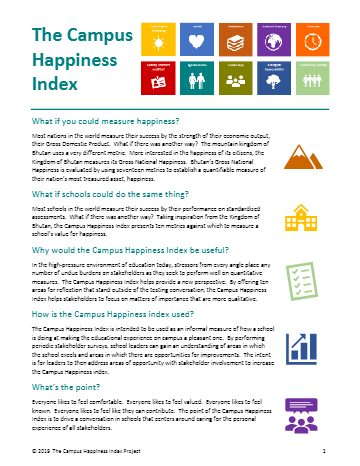
Campus Happiness Index
 No Prep Plans
$3.00
Book Labels
No Prep PlansFree

Big Band & Jazz Musicians Poster Set (1930s–1950s)
No Prep Plans$3.50
FREE Geography Learning Stations Signs & Choice Cards--Reusable
No Prep PlansFree
Refugee: Author's Craft, Themes & Evidence Bundle 10 Literary Analysis Lessons
No Prep Plans$29.25
Ancient World Turning Points Bundle | 10 Research + Group Project Lessons | 6-10
No Prep Plans$29.25
Request a quote or purchase order
For schools and districts. Your request goes to No Prep Plans, who will reply to your email with a quote or invoice.
Sent. The seller will reply to your email.
Report this listing
What your notice must include
The address of the listing on Classroom Clearinghouse (for example, the /p/ link).
https://classroomclearinghouse.com/p/nu35gkyadq
Your name, mailing address, phone number, and email.
How to report
Your name, company, mailing address, phone number, and email.
The address of each listing or store you are reporting.
https://classroomclearinghouse.com/p/nu35gkyadq
Copyright owners can also use the DMCA notice page.
Thanks. The report is in the review queue.