
Preview: 3 of 14 pages. Scroll sideways to see more.
$3.25
In your cart. View cart
No account needed. You get a download link.
| Grade | 6th Grade to 8th Grade |
|---|---|
| Subject | Reading |
| Format | PDF, 14 pages |
| How was this made? | Created by hand, with images from generation tools |
| Updated | 2026-10-26 |
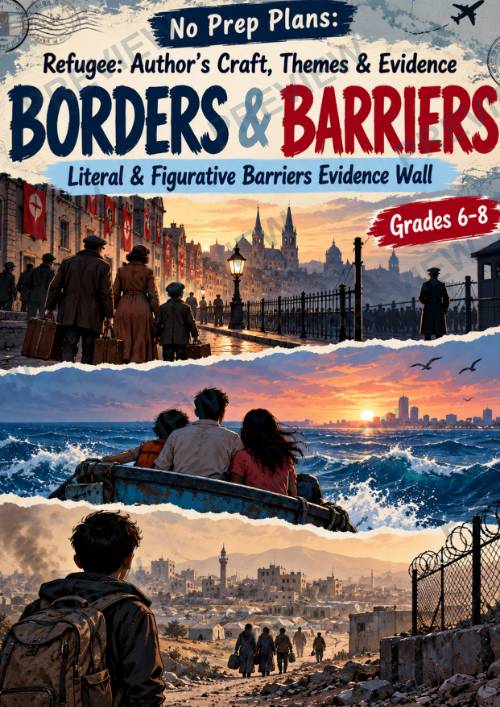
Refugee:Author's Craft,Themes & Evidence:Borders & Barriers Literal & Figurative
Refugee: Author's Craft, Themes & Evidence — Borders & Barriers
Literal & Figurative Barriers Evidence Wall | Grades 6–8
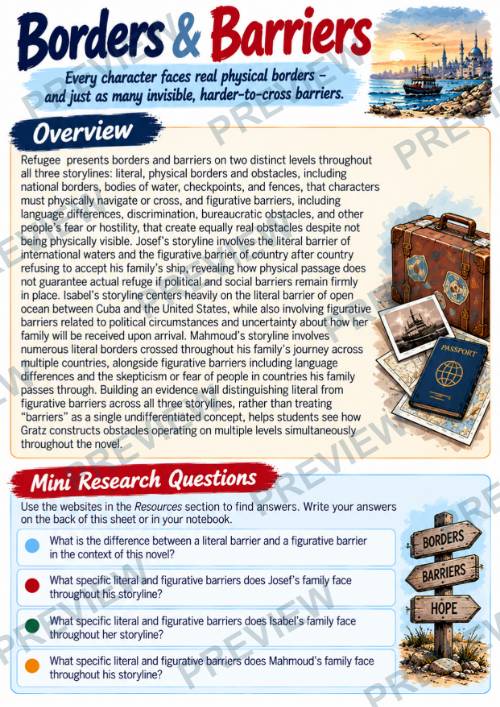
Some barriers can be seen. Others are invisible—but just as difficult to overcome.
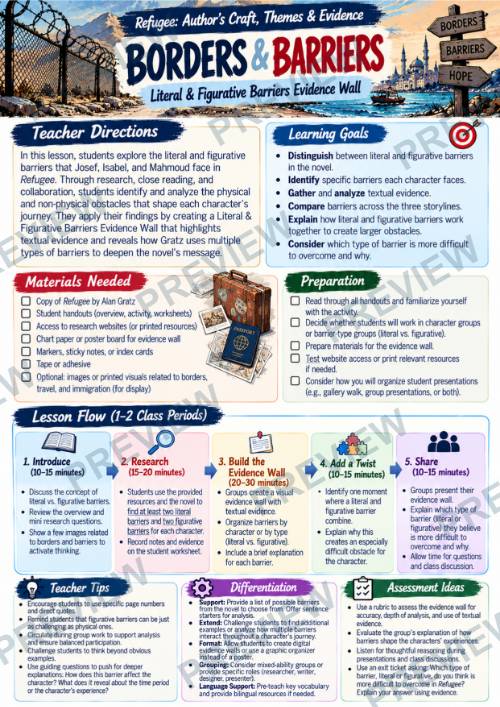
In this engaging, no-prep lesson, students investigate the literal and figurative barriers faced by Josef, Isabel, and Mahmoud in Refugee by Alan Gratz. Through collaborative research, close reading, and textual analysis, students examine how physical obstacles, discrimination, government policies, and social attitudes shape each character's journey.
Students apply their findings by creating a Literal & Figurative Barriers Evidence Wall, using textual evidence to compare obstacles, analyze their consequences, and explore how Gratz develops larger ideas about displacement, survival, and the search for safety.
What's Included
- Teacher Directions with lesson flow, differentiation, and assessment ideas
- Student Overview
- Mini Research Questions
- Five-Step Group Research Activity
- Three Student Worksheets for evidence collection, barrier analysis, and evidence-based conclusions
- Color and Black-and-White Versions of Student Worksheets
Students Will
- Distinguish between literal and figurative barriers
- Identify physical and invisible obstacles faced by all three protagonists
- Collect and organize specific textual evidence
- Analyze how barriers influence characters' decisions, safety, and opportunities
- Investigate moments when literal and figurative barriers combine
- Compare obstacles across three historical settings
- Evaluate which type of barrier is more difficult to overcome
- Develop and defend a claim using evidence from multiple storylines
- Explore how Gratz uses barriers to communicate larger messages about refugees
- Create and present a collaborative Literal & Figurative Barriers Evidence Wall
Why Teachers Love It
- No Prep Required: Ready-to-use directions and structured student activities
- Flexible Timing: Designed for 1–2 class periods of 45–60 minutes each
- Meaningful Literary Analysis: Moves students beyond identifying obstacles to examining their consequences and significance
- Collaborative Learning: Encourages discussion, research, and evidence-based reasoning
- Critical Thinking: Challenges students to evaluate how physical and invisible barriers interact
- Textual Evidence Focus: Strengthens students' ability to support claims with specific details from the novel
- Creative Application: Students organize and communicate their findings through an interactive evidence wall
- Built-In Differentiation: Supports a range of reading levels and learning needs
- Print-Friendly: Includes color and black-and-white student worksheets
Perfect For:
- Refugee by Alan Gratz novel studies
- Author's craft and theme analysis
- Literary conflict and character development lessons
- Close reading and textual evidence practice
- Compare-and-contrast activities
- Collaborative literary investigations
- Small-group research and presentations
- Discussions about immigration, displacement, prejudice, and human rights
Help students discover that crossing a physical border does not always mean overcoming the barriers to safety, freedom, and belonging!
Through this investigation, students develop a deeper understanding of how Gratz uses both visible and invisible obstacles to connect three refugee journeys across different historical periods. Students learn to recognize how physical borders, political decisions, and human attitudes can shape the experiences of people seeking refuge.
This resource is an independent educational supplement and is not affiliated with or endorsed by Alan Gratz or the novel's publisher. A copy of the novel is required.
·
This resource is also part of a bundle with 9 other resources
Questions
No questions yet.
Ask a question
Your question goes to No Prep Plans. Answers show on this page, without your name or email.
Sent. The answer will show on this page.
Reviews
No reviews yet. Buyers can review a resource from their order page.
More from No Prep Plans
Campus Happiness Index
 No Prep Plans
$3.00
Book Labels
No Prep PlansFree
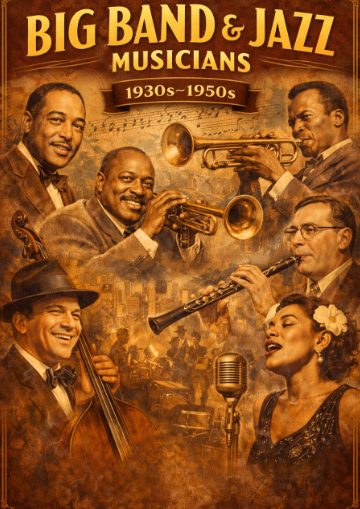
Big Band & Jazz Musicians Poster Set (1930s–1950s)
No Prep Plans$3.50
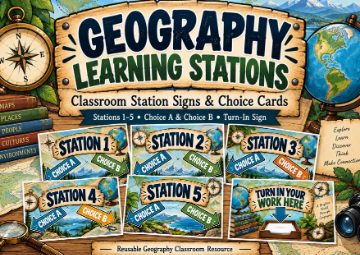
FREE Geography Learning Stations Signs & Choice Cards--Reusable
No Prep PlansFree
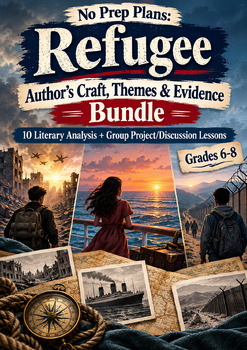
Refugee: Author's Craft, Themes & Evidence Bundle 10 Literary Analysis Lessons
No Prep Plans$29.25
Ancient World Turning Points Bundle | 10 Research + Group Project Lessons | 6-10
No Prep Plans$29.25
Request a quote or purchase order
For schools and districts. Your request goes to No Prep Plans, who will reply to your email with a quote or invoice.
Sent. The seller will reply to your email.
Report this listing
What your notice must include
The address of the listing on Classroom Clearinghouse (for example, the /p/ link).
https://classroomclearinghouse.com/p/jtgyn6cz3x
Your name, mailing address, phone number, and email.
How to report
Your name, company, mailing address, phone number, and email.
The address of each listing or store you are reporting.
https://classroomclearinghouse.com/p/jtgyn6cz3x
Copyright owners can also use the DMCA notice page.
Thanks. The report is in the review queue.