
Preview: 3 of 14 pages. Scroll sideways to see more.
$3.00
In your cart. View cart
No account needed. You get a download link.
| Grade | 9th Grade to 12th Grade |
|---|---|
| Resource type | Lesson Plans |
| Subject | Science |
| Format | PDF, 14 pages |
| How was this made? | Created by hand, with images from generation tools |
| Updated | 2026-10-26 |
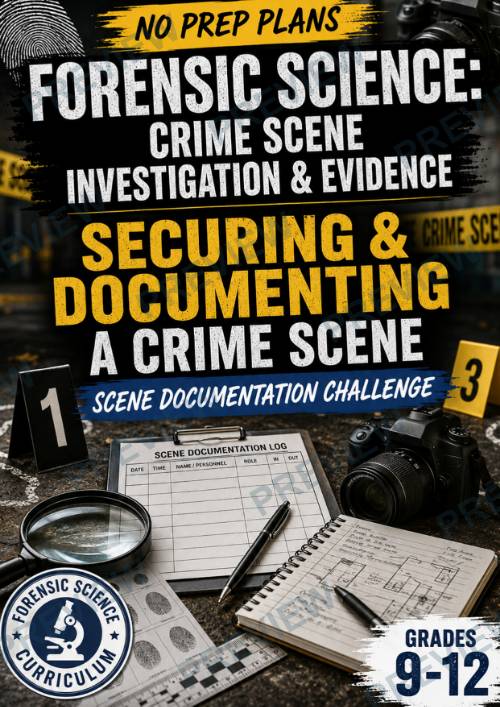
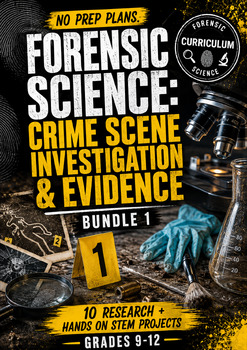
No Prep Plans Forensic Science: Securing & Documenting a Crime Scene
No Prep Plans Forensic Science: Securing & Documenting a Crime Scene | CSI Evidence
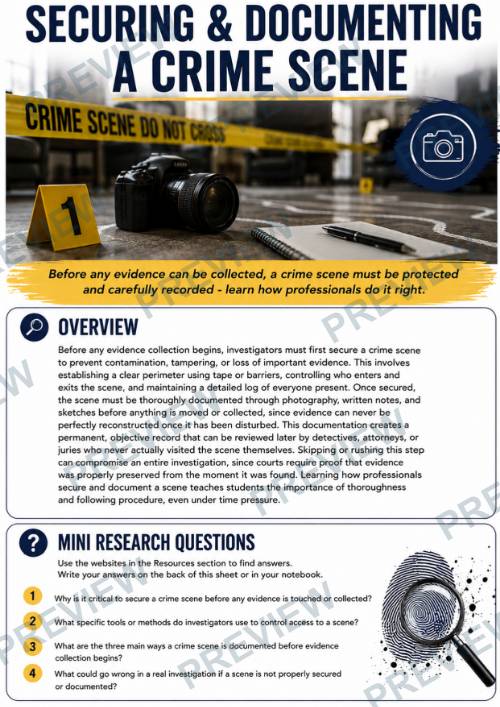
Introduce students to one of the most important parts of crime scene investigation with this engaging No Prep Forensic Science lesson for Grades 9–12. Students explore why a crime scene must be secured before evidence is touched and how investigators create an accurate, objective record through photography, written notes, sketches, access control, and careful documentation.
Students then put their learning into practice through the Scene Documentation Challenge, developing a logical protocol for securing and documenting a crime scene while considering how mistakes could compromise evidence and an investigation.
What's Included
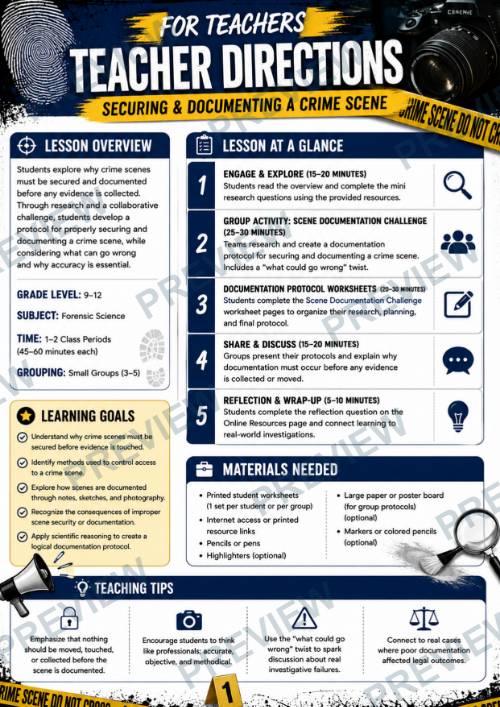
- Teacher Directions
- Forensic Science Overview + Research
- Scene Documentation Group Activity
- 3 Student Activity Pages
- Online Resources
- Color + Black-and-White Student Pages
Students Will Explore
- Why crime scenes must be secured before evidence is collected
- How investigators establish and maintain a secure perimeter
- Why access to a crime scene must be carefully controlled
- The purpose of a scene access log
- How photography, written notes, and sketches document a scene
- Why evidence must be documented before it is moved
- The importance of objective rather than subjective observations
- How poor documentation can compromise an investigation
- Why accurate records matter when evidence is later reviewed
- How investigators create a systematic crime scene documentation protocol
Why Teachers Love This Lesson
- No elaborate classroom crime scene setup required
- Provides a complete lesson for 1–2 class periods
- Combines research with meaningful hands-on analysis and planning
- Moves beyond vocabulary into the reasoning behind professional CSI procedures
- Gives students practice with observation, sequencing, objectivity, and evidence-based thinking
- High-interest forensic science content encourages student engagement
- Structured activities provide guidance without simply giving students the answers
- Works as a stand-alone lesson or as part of a larger Crime Scene Investigation & Evidence unit
- Includes both full-color and printer-friendly black-and-white student pages
Great For
- Forensic Science
- Crime Scene Investigation
- CSI Units
- Criminal Justice
- High School Science
- STEM
- Scientific Observation
- Critical Thinking
- Collaborative Learning
- Grades 9–12
Time: 1–2 class periods, approximately 45–60 minutes each
Format: No Prep • Research • Crime Scene Analysis • Collaboration • Student Worksheets • Color + Black-and-White Versions
·
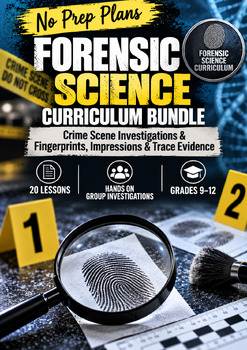
This resource is also part of 2 bundles
Questions
No questions yet.
Ask a question
Your question goes to No Prep Plans. Answers show on this page, without your name or email.
Sent. The answer will show on this page.
Reviews
No reviews yet. Buyers can review a resource from their order page.
More from No Prep Plans
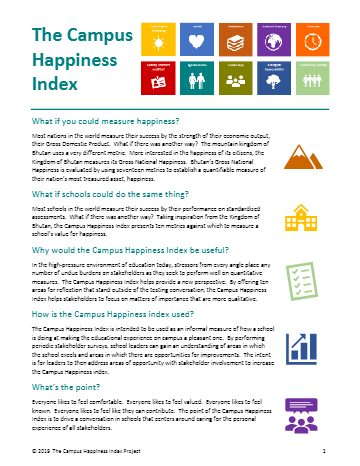
Campus Happiness Index
 No Prep Plans
$3.00
Book Labels
No Prep PlansFree

Big Band & Jazz Musicians Poster Set (1930s–1950s)
No Prep Plans$3.50
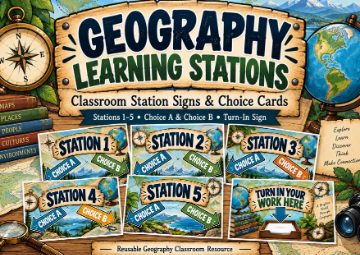
FREE Geography Learning Stations Signs & Choice Cards--Reusable
No Prep PlansFree
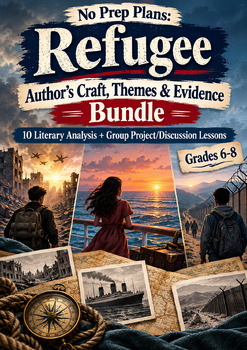
Refugee: Author's Craft, Themes & Evidence Bundle 10 Literary Analysis Lessons
No Prep Plans$29.25

Ancient World Turning Points Bundle | 10 Research + Group Project Lessons | 6-10
No Prep Plans$29.25
Request a quote or purchase order
For schools and districts. Your request goes to No Prep Plans, who will reply to your email with a quote or invoice.
Sent. The seller will reply to your email.
Report this listing
What your notice must include
The address of the listing on Classroom Clearinghouse (for example, the /p/ link).
https://classroomclearinghouse.com/p/bmqjpc692v
Your name, mailing address, phone number, and email.
How to report
Your name, company, mailing address, phone number, and email.
The address of each listing or store you are reporting.
https://classroomclearinghouse.com/p/bmqjpc692v
Copyright owners can also use the DMCA notice page.
Thanks. The report is in the review queue.