
Preview: 3 of 14 pages. Scroll sideways to see more.
$3.00
In your cart. View cart
No account needed. You get a download link.
| Grade | 6th Grade to 8th Grade |
|---|---|
| Resource type | Lesson Plans |
| Subject | History |
| Format | PDF, 14 pages |
| How was this made? | Created by hand, with images from generation tools |
| Updated | 2026-10-26 |
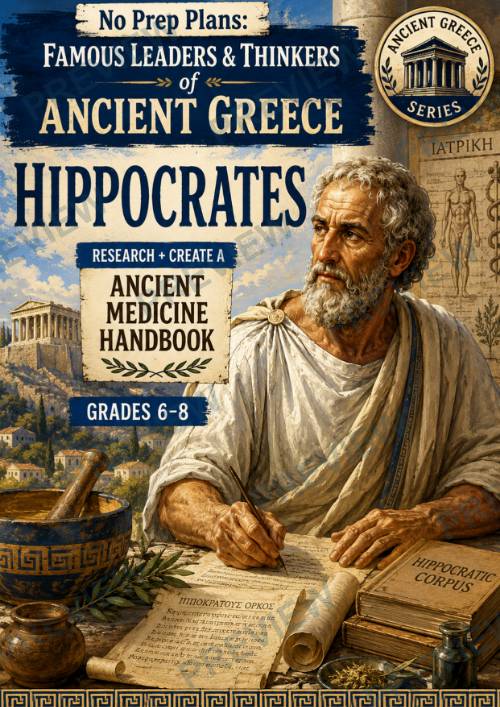
No Prep Plans: Famous Leaders & Thinkers of Ancient Greece – Hippocrates
No Prep Plans: Famous Leaders & Thinkers of Ancient Greece – Hippocrates
Research + Create an Ancient Medicine Handbook
Introduce your students to Hippocrates, the physician often called the "Father of Western Medicine." In this engaging, no-prep lesson, students investigate how Hippocrates transformed medicine by encouraging careful observation, evidence-based thinking, and ethical care instead of relying on superstition and myths to explain disease.
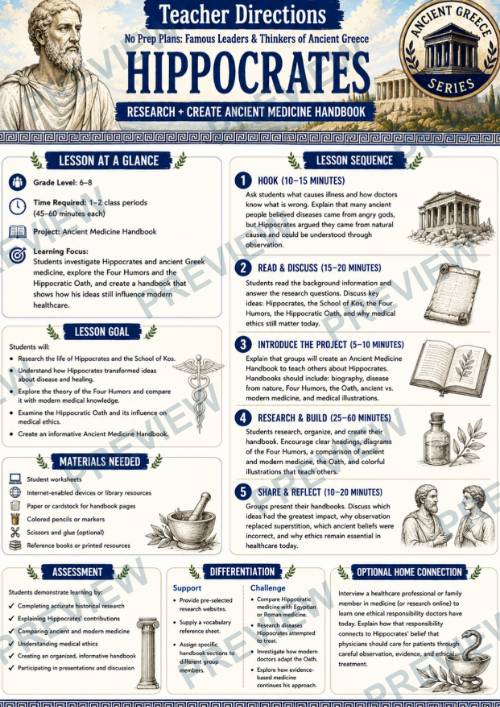
Through guided research, collaborative learning, and thoughtful reflection, students create an Ancient Medicine Handbook that explores early Greek medical practices, the Four Humors, the Hippocratic Oath, and the lasting influence of Hippocrates on modern healthcare.
What's Included
- Teacher directions (1–2 class periods)
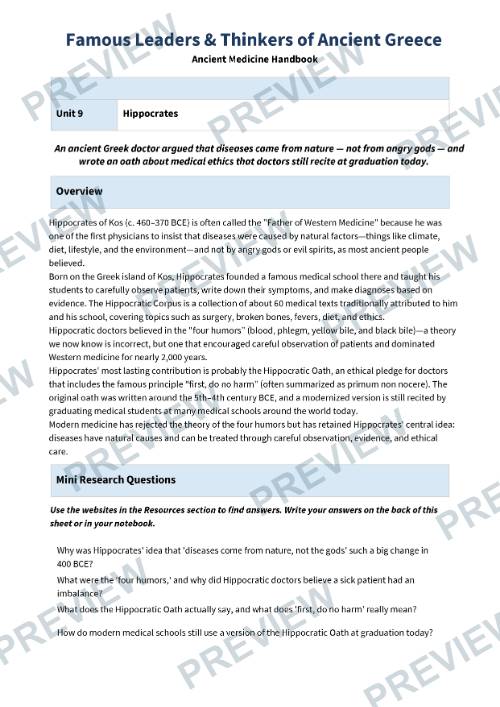
- Student background reading
- Guided research organizer exploring the life and work of Hippocrates
- Ancient Medicine Handbook planning page
- Reflection and historical thinking worksheet
- Online research resources
- Black-and-white versions of all student pages for easy printing
Students Will Learn About
- The life of Hippocrates and the medical school on the island of Kos
- Why Hippocrates is known as the "Father of Western Medicine"
- How ancient Greeks explained illness before Hippocrates
- The shift from superstition to observation and evidence
- The theory of the Four Humors and why it was eventually rejected
- The Hippocratic Corpus and early medical writing
- The Hippocratic Oath and its influence on medical ethics
- How modern medicine continues to build on Hippocrates' emphasis on careful observation and ethical patient care
- The similarities and differences between ancient and modern medicine
Perfect For
- Ancient Greece units
- World History
- Middle School Social Studies
- Grades 6–8
- Cross-curricular History and Science lessons
- Health and medical history units
- Inquiry-based learning
- Cooperative learning activities
- Print-and-go history lessons
- Substitute teacher plans
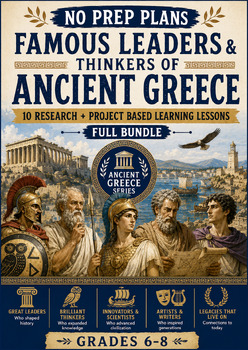
Part of the Complete Famous Leaders & Thinkers of Ancient Greece Series
This lesson is one title in a comprehensive series exploring the leaders, philosophers, scientists, writers, and innovators who shaped ancient Greek civilization. Each lesson follows a consistent classroom-ready format that combines historical research with an engaging collaborative project while helping students connect ancient achievements to the modern world.
Why Teachers Love It
- No-prep, print-and-go lesson
- Integrates history, science, health, and ethics
- Encourages critical thinking through historical investigation
- Helps students distinguish between scientific ideas and historical beliefs
- Includes structured organizers that support independent learning
- Connects ancient medicine to modern healthcare and medical ethics
- Flexible for individual, partner, or small-group instruction
- Includes both full-color and printer-friendly black-and-white student pages
This resource is an independent educational product created to support classroom instruction. It is not affiliated with or endorsed by any curriculum, examination board, or educational organization.
·
This resource is also part of a bundle with 9 other resources
Questions
No questions yet.
Ask a question
Your question goes to No Prep Plans. Answers show on this page, without your name or email.
Sent. The answer will show on this page.
Reviews
No reviews yet. Buyers can review a resource from their order page.
More from No Prep Plans
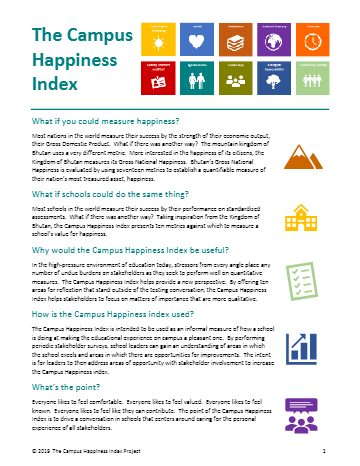
Campus Happiness Index
 No Prep Plans
$3.00
Book Labels
No Prep PlansFree
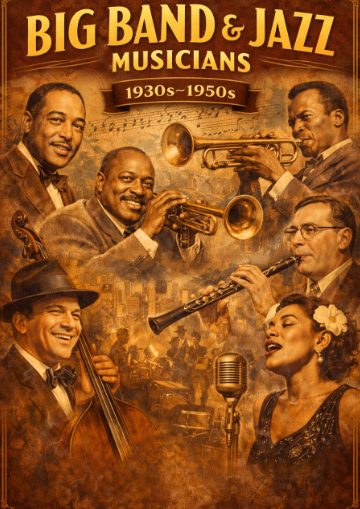
Big Band & Jazz Musicians Poster Set (1930s–1950s)
No Prep Plans$3.50
FREE Geography Learning Stations Signs & Choice Cards--Reusable
No Prep PlansFree
Refugee: Author's Craft, Themes & Evidence Bundle 10 Literary Analysis Lessons
No Prep Plans$29.25
Ancient World Turning Points Bundle | 10 Research + Group Project Lessons | 6-10
No Prep Plans$29.25
Request a quote or purchase order
For schools and districts. Your request goes to No Prep Plans, who will reply to your email with a quote or invoice.
Sent. The seller will reply to your email.
Report this listing
What your notice must include
The address of the listing on Classroom Clearinghouse (for example, the /p/ link).
https://classroomclearinghouse.com/p/bfbetwgj7n
Your name, mailing address, phone number, and email.
How to report
Your name, company, mailing address, phone number, and email.
The address of each listing or store you are reporting.
https://classroomclearinghouse.com/p/bfbetwgj7n
Copyright owners can also use the DMCA notice page.
Thanks. The report is in the review queue.