
Preview: 3 of 14 pages. Scroll sideways to see more.
$3.00
In your cart. View cart
No account needed. You get a download link.
| Grade | 6th Grade to 8th Grade |
|---|---|
| Resource type | Projects |
| Subject | History |
| Format | PDF, 14 pages |
| How was this made? | Created by hand, with images from generation tools |
| Updated | 2026-10-26 |
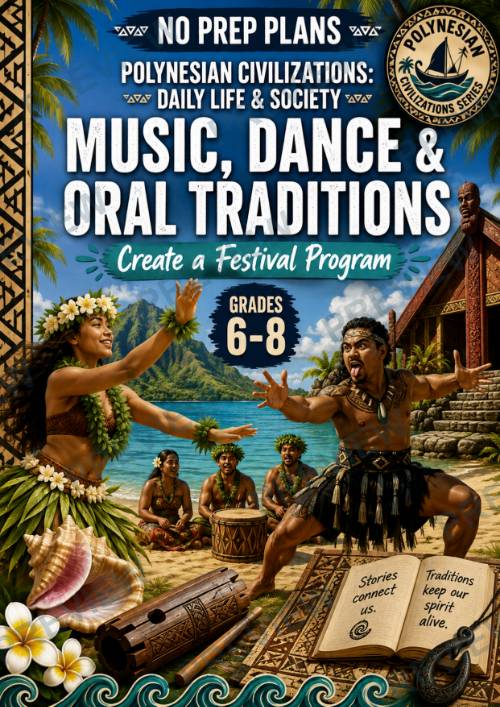
Polynesian Civilizations: Daily Life & Society: Music, Dance & Oral Traditions
No Prep Plans: Polynesian Civilizations: Daily Life & Society: Music, Dance & Oral Traditions | Create a Festival Program | Grades 6–8
Bring the vibrant performing arts of Polynesia into your classroom with this engaging Festival Program project! Students discover how music, dance, storytelling, chants, and ceremonies preserved history, celebrated community, and passed cultural traditions from one generation to the next. They then apply their learning by designing an illustrated Festival Program that showcases the performances, stories, and traditions of a traditional Polynesian celebration.
Through inquiry-based activities, planning tasks, critical-thinking challenges, and a creative final project, students explore why oral traditions were essential in cultures without writing and how living traditions such as the hula, haka, chants, drumming, and storytelling continue to thrive today.
Perfect for Ancient History, World History, Geography, Humanities, and cross-curricular social studies classrooms.
What's Included
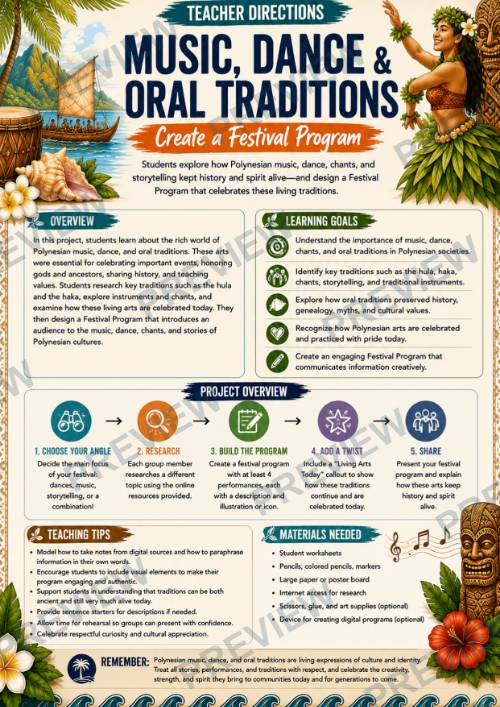
- Teacher Directions Page
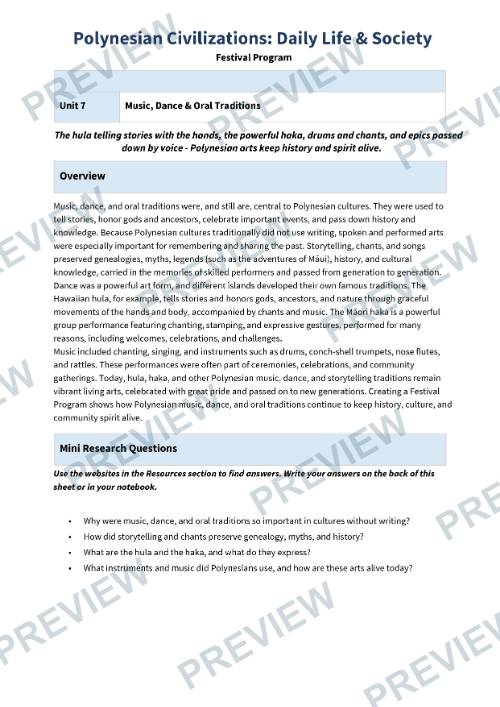
- Student Discovery Page: How Did Polynesians Keep Stories Alive?
- Festival Program Planning Page
- Dig Deeper Critical Thinking & Reflection Page
- Black-and-White versions of every student page
- Print-ready A4 Portrait format (full bleed)
Students Will Learn
- Why music, dance, and oral traditions were central to Polynesian societies
- How storytelling, chants, and performances preserved history, genealogy, and cultural knowledge
- The significance of traditions such as the hula and haka
- The roles of drums, conch-shell trumpets, nose flutes, chanting, and singing in ceremonies and celebrations
- How performing arts strengthened identity, community, and cultural continuity
- How Polynesian performing arts continue to be practiced and celebrated today
- How to organize research into an engaging illustrated Festival Program
- How to communicate historical understanding through creative design and visual presentation
Perfect For
- Ancient Civilizations
- Ancient History
- World History
- Geography
- Humanities
- Social Studies
- Cultural Studies
- Inquiry-Based Learning
- Project-Based Learning (PBL)
- Research Projects
- Independent Learning
- Group Activities
- Early Finishers
- Grades 6–8
Why Teachers Love It
- Ready-to-use, no-prep lesson
- Engages students through music, dance, storytelling, and performance
- Encourages inquiry, creativity, and historical thinking
- Develops research, literacy, planning, and presentation skills
- Includes an authentic, hands-on Festival Program project
- Promotes respectful appreciation of living Indigenous cultural traditions
- Includes both full-colour and black-and-white student pages
- Flexible for individual, partner, or collaborative learning
Part of the Polynesian Civilizations: Daily Life & Society Series
This lesson is part of the No Prep Plans: Polynesian Civilizations – Daily Life & Society series, a collection of classroom-ready resources exploring the history, culture, beliefs, leadership, technology, environment, traditions, and everyday lives of Polynesian societies through engaging research lessons and hands-on projects.
Curriculum Alignment & Disclaimer
This resource is designed to support and supplement classroom instruction and aligns well with topics commonly taught in the Australian Curriculum, including the Humanities and Social Sciences (HASS) learning area. It supports students in investigating cultural traditions and oral histories, examining how music, dance, storytelling, and ceremonies preserved knowledge and identity, exploring continuity and change in living cultural practices, developing historical and geographical inquiry skills, interpreting historical and visual sources, and communicating evidence-based conclusions through creative projects.
This is an independent educational resource and is not affiliated with, endorsed by, or officially connected to ACARA or the Australian Curriculum. It is intended to complement—not replace—your existing curriculum. Teachers are encouraged to adapt, modify, extend, and differentiate the activities to best meet the needs of their students, curriculum requirements, classroom context, and local learning goals.
·
This resource is also part of a bundle with 9 other resources
Questions
No questions yet.
Ask a question
Your question goes to No Prep Plans. Answers show on this page, without your name or email.
Sent. The answer will show on this page.
Reviews
No reviews yet. Buyers can review a resource from their order page.
More from No Prep Plans
Campus Happiness Index
 No Prep Plans
$3.00
Book Labels
No Prep PlansFree
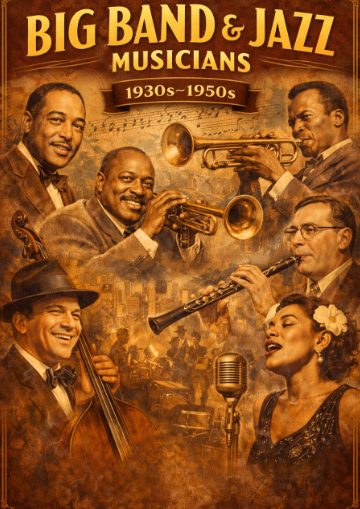
Big Band & Jazz Musicians Poster Set (1930s–1950s)
No Prep Plans$3.50
FREE Geography Learning Stations Signs & Choice Cards--Reusable
No Prep PlansFree
Refugee: Author's Craft, Themes & Evidence Bundle 10 Literary Analysis Lessons
No Prep Plans$29.25
Ancient World Turning Points Bundle | 10 Research + Group Project Lessons | 6-10
No Prep Plans$29.25
Request a quote or purchase order
For schools and districts. Your request goes to No Prep Plans, who will reply to your email with a quote or invoice.
Sent. The seller will reply to your email.
Report this listing
What your notice must include
The address of the listing on Classroom Clearinghouse (for example, the /p/ link).
https://classroomclearinghouse.com/p/azsjxy24nx
Your name, mailing address, phone number, and email.
How to report
Your name, company, mailing address, phone number, and email.
The address of each listing or store you are reporting.
https://classroomclearinghouse.com/p/azsjxy24nx
Copyright owners can also use the DMCA notice page.
Thanks. The report is in the review queue.