
Preview: 3 of 14 pages. Scroll sideways to see more.
$3.00
In your cart. View cart
No account needed. You get a download link.
| Grade | 6th Grade to 10th Grade |
|---|---|
| Resource type | Projects |
| Subject | English Language Arts |
| Format | PDF, 14 pages |
| How was this made? | Created by hand, with images from generation tools |
| Updated | 2026-10-26 |
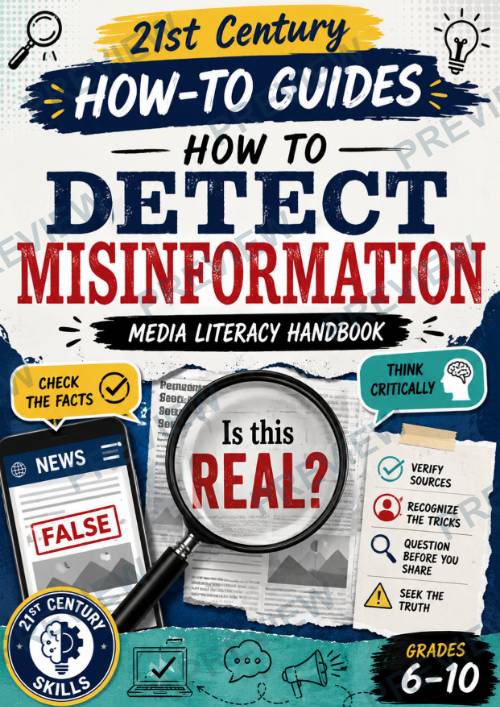
21st Century How-To Guides: How to Detect Misinformation
21st Century How-To Guides: How to Detect Misinformation | Media Literacy Handbook | | Grades 6–10
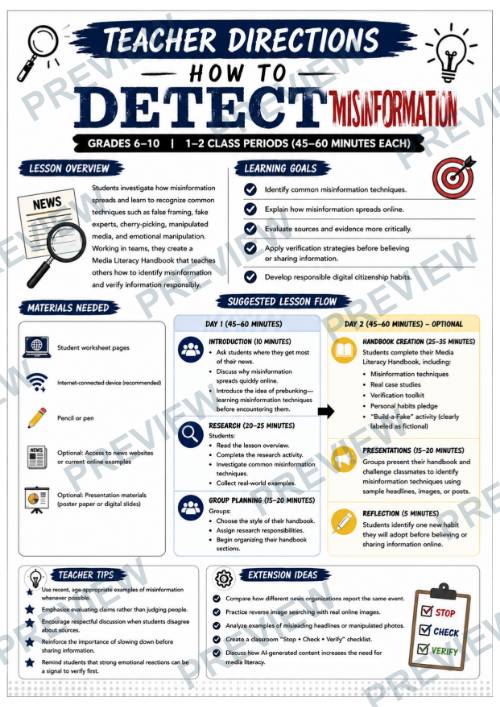
In today's digital world, students encounter thousands of headlines, videos, images, and social media posts every week—but not all of them are trustworthy. This engaging, no-prep lesson helps students recognize how misinformation is created, why it spreads so quickly, and how to think critically before believing or sharing information.
Instead of simply fact-checking individual claims, students investigate the common "recipes" behind misinformation—including false framing, fake experts, cherry-picking, emotional manipulation, and manipulated media. Working collaboratively, they create a Media Literacy Handbook that teaches others how to identify misleading content and become responsible digital citizens.
What's Included
- Teacher directions (1–2 class periods)
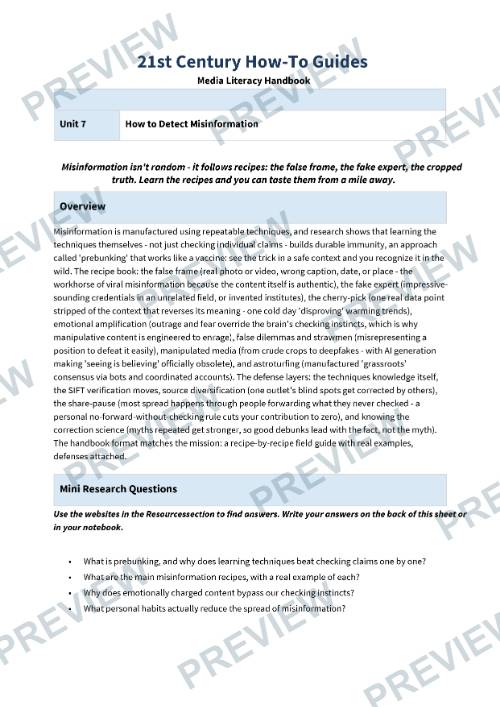
- Student research overview
- Mini research activity
- Collaborative Media Literacy Handbook project
- Online resource list
- 3 student planning and reflection worksheets
- Full-color version
- Black-and-white version
- Print-ready PDF
Students Will Learn How To
- Identify common misinformation techniques
- Explain why misinformation spreads so effectively
- Recognize emotional manipulation and misleading media
- Evaluate sources and evidence critically
- Apply verification strategies before sharing information
- Compare responsible media habits with misinformation tactics
- Create a media literacy handbook that teaches others
- Develop lifelong digital citizenship skills
Perfect For
- Media Literacy
- Digital Literacy
- Information Literacy
- Digital Citizenship
- Library & Media Center Activities
- Technology Classes
- English Language Arts
- Social Studies
- Advisory Classes
- Project-Based Learning
Part of the 21st Century How-To Guides Series
Help students build practical, future-ready skills through engaging, project-based activities designed for today's learners.
Why Teachers Love It
- No-prep, ready-to-use lesson
- Develops critical thinking and source evaluation skills
- Encourages collaboration and discussion
- Supports responsible digital citizenship
- Reinforces research and media literacy skills
- Flexible for individual, partner, or group work
- Easy to integrate across multiple subject areas
Help students become thoughtful, informed consumers of information by giving them the tools to recognize misinformation, verify facts, and make responsible decisions before they click, believe, or share.
·
This resource is also part of a bundle with 9 other resources
Questions
No questions yet.
Ask a question
Your question goes to No Prep Plans. Answers show on this page, without your name or email.
Sent. The answer will show on this page.
Reviews
No reviews yet. Buyers can review a resource from their order page.
More from No Prep Plans
Campus Happiness Index
 No Prep Plans
$3.00
Book Labels
No Prep PlansFree

Big Band & Jazz Musicians Poster Set (1930s–1950s)
No Prep Plans$3.50
FREE Geography Learning Stations Signs & Choice Cards--Reusable
No Prep PlansFree
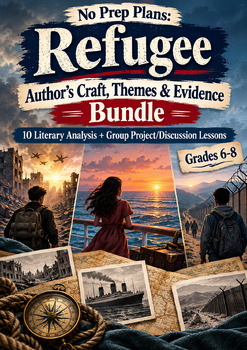
Refugee: Author's Craft, Themes & Evidence Bundle 10 Literary Analysis Lessons
No Prep Plans$29.25
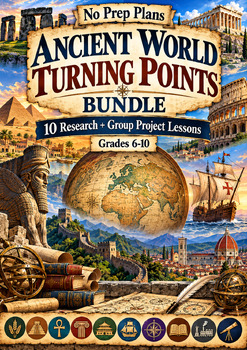
Ancient World Turning Points Bundle | 10 Research + Group Project Lessons | 6-10
No Prep Plans$29.25
Request a quote or purchase order
For schools and districts. Your request goes to No Prep Plans, who will reply to your email with a quote or invoice.
Sent. The seller will reply to your email.
Report this listing
What your notice must include
The address of the listing on Classroom Clearinghouse (for example, the /p/ link).
https://classroomclearinghouse.com/p/2gqcnvx5zc
Your name, mailing address, phone number, and email.
How to report
Your name, company, mailing address, phone number, and email.
The address of each listing or store you are reporting.
https://classroomclearinghouse.com/p/2gqcnvx5zc
Copyright owners can also use the DMCA notice page.
Thanks. The report is in the review queue.